5 min read

Designing products from scratch in fast-moving teams

Designing products from scratch in fast-moving teams

Client

Startup studio and B2B SaaS teams

My role

Product Designer

Timeline

2020 – 2024

Overview

The problem

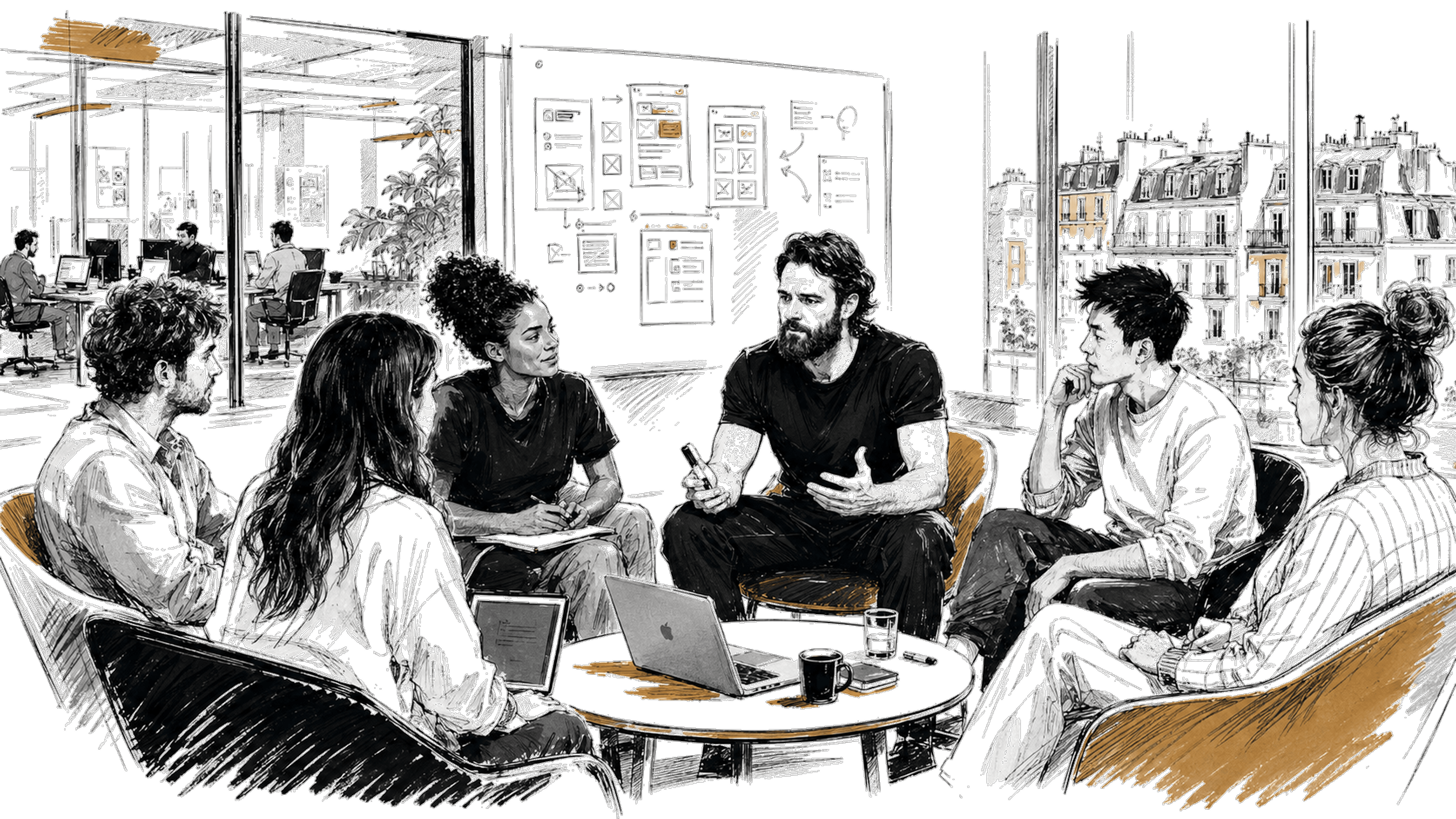
In startup and SaaS environments, product direction can change fast. Some projects started with an idea, a business model or a technical need, but no existing design system, no stable product base and very little time to move. The challenge was to turn unclear starting points into usable flows, prototypes and interfaces that teams could actually build.

The solution

I worked directly with founders, product owners, developers, users and business teams to shape mobile apps, SaaS products, onboarding journeys, workspace tools and influencer workflows. I created product flows, UI foundations, design systems, research notes, prototypes and delivery-ready screens across projects that often had to move from zero to something usable in a few weeks.

Who I worked with

Partners from idea to delivery

Shaping product direction

Founders

Co-founders

CEOs

Product owners

Business teams

Startup partners

Turning work into products

Developers

Users

Clients

International teams

Influencers

Brand users

What I worked on

Mobile apps, SaaS products and early-stage platforms

Design systems

B2B SaaS

Workspace tools

Influencer workflows

Mobile applications

User research

What I worked on

Mobile apps, SaaS products and early-stage platforms

Design systems

B2B SaaS

Workspace tools

Influencer workflows

Mobile applications

User research

What I worked on

Mobile apps, SaaS products and early-stage platforms

Design systems

B2B SaaS

Workspace tools

Influencer workflows

Mobile applications

User research

Approach

Turning early product ideas into usable products

Four moves to shape, design and deliver startup products when time, direction and resources were always moving.

Start from zero fast

Turned loose ideas, business goals and early product needs into a first usable direction.

Shape the core journeys

Mapped the main flows across mobile apps, SaaS platforms, onboarding, workspace tools and influencer workflows.

Build product foundations from scratch

Created UI foundations, components and design systems when no reusable product base existed yet.

Move designs into delivery

Worked closely with developers, product owners and founders to turn prototypes into screens ready to build.

Turning early product ideas into usable products

Four moves to shape, design and deliver startup products when time, direction and resources were always moving.

Start from zero fast

Turned loose ideas, business goals and early product needs into a first usable direction.

Shape the core journeys

Mapped the main flows across mobile apps, SaaS platforms, onboarding, workspace tools and influencer workflows.

Build product foundations from scratch

Created UI foundations, components and design systems when no reusable product base existed yet.

Move designs into delivery

Worked closely with developers, product owners and founders to turn prototypes into screens ready to build.

Turning early product ideas into usable products

Four moves to shape, design and deliver startup products when time, direction and resources were always moving.

Start from zero fast

Turned loose ideas, business goals and early product needs into a first usable direction.

Shape the core journeys

Mapped the main flows across mobile apps, SaaS platforms, onboarding, workspace tools and influencer workflows.

Build product foundations from scratch

Created UI foundations, components and design systems when no reusable product base existed yet.

Move designs into delivery

Worked closely with developers, product owners and founders to turn prototypes into screens ready to build.

01. Start from zero fast

Early-stage work rarely started with a clean brief. Some projects began with a business idea, a short timeline, a founder’s vision or a technical need that had to become a product quickly. I had to understand the goal, identify what mattered first, and turn scattered input into a direction the team could discuss, test and build from.

Product framing

Focus areas

  • Business idea

  • User need

  • Product goal

  • MVP scope

  • Core journey

  • Technical reality

  • Launch priorities

Product framing

Focus areas

  • Business idea

  • User need

  • Product goal

  • MVP scope

  • Core journey

  • Technical reality

  • Launch priorities

Founder collaboration

Fast decisions

  • Direct feedback

  • Moving priorities

  • Short cycles

Founder collaboration

Fast decisions

  • Direct feedback

  • Moving priorities

  • Short cycles

Early research

What I used

  • Interviews

  • Benchmarks

  • First flows

Early research

What I used

  • Interviews

  • Benchmarks

  • First flows

02. Shape the core journeys

The work covered very different product types: real-estate investment, premium car rental, workspace management, influencer onboarding and campaign workflows. Each project needed its own logic, audience and product flow. I moved quickly from research and notes to user journeys, wireframes, prototypes and high-fidelity screens.

SaaS workflows

Built for web products

  • Dashboards

  • Maps

  • Filters

  • Approval flows

SaaS workflows

Built for web products

  • Dashboards

  • Maps

  • Filters

  • Approval flows

Onboarding systems

From sign-up to first use

  • Login

  • Verification

  • Social connection

Onboarding systems

From sign-up to first use

  • Login

  • Verification

  • Social connection

Mobile app journeys

Focus areas

  • Onboarding

  • Core actions

  • Product discovery

  • Account states

  • Booking flows

  • Investment flows

  • Mobile patterns

Mobile app journeys

Focus areas

  • Onboarding

  • Core actions

  • Product discovery

  • Account states

  • Booking flows

  • Investment flows

  • Mobile patterns

03. Build product foundations from scratch

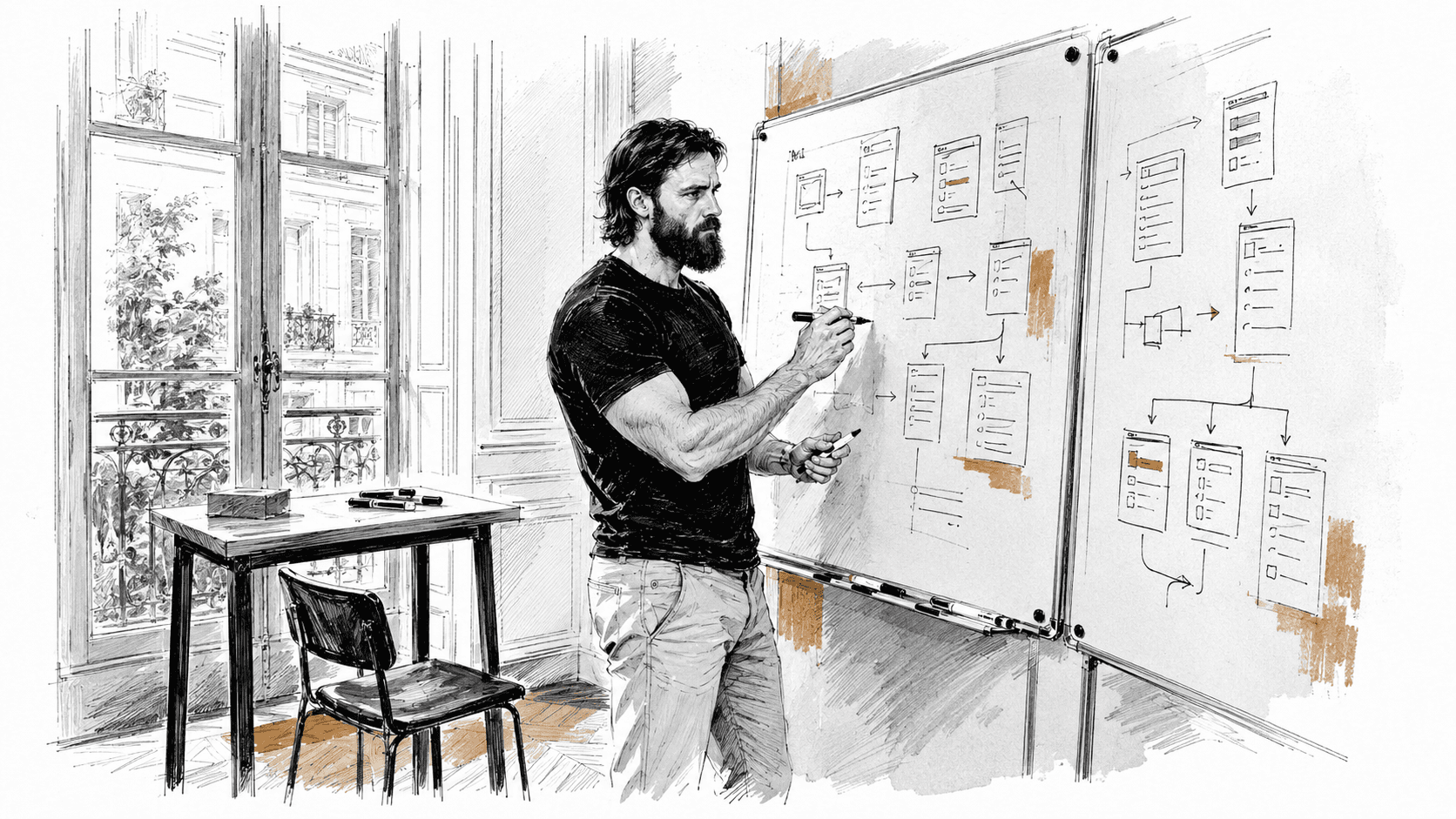
Most of these projects did not have an existing design system. Each product needed its own UI base, component logic and reusable patterns. I had to design from scratch, but also make the work easy to understand for developers and reusable enough to support future screens.

Product foundations without inherited systems
04. Move designs into delivery

In small teams, design could not stay theoretical. I worked close to developers, product owners and founders to make sure the work could move into production. That meant preparing screens, states, Jira tickets, user stories, prototypes and handoff material while adapting to changes in scope, priority and technical reality.

Delivery handoff

Focus areas

  • Jira stories

  • Dev-ready screens

  • Prototypes

  • States

  • Edge cases

  • Flow logic

  • Documentation


Delivery handoff

Focus areas

  • Jira stories

  • Dev-ready screens

  • Prototypes

  • States

  • Edge cases

  • Flow logic

  • Documentation


Small-team workflow

How I worked

  • Direct with founders

  • Product and dev

  • Fast feedback

Small-team workflow

How I worked

  • Direct with founders

  • Product and dev

  • Fast feedback

Production mindset

What mattered

  • Buildable screens

  • Reusable parts

  • Clear decisions

Production mindset

What mattered

  • Buildable screens

  • Reusable parts

  • Clear decisions

Impact

Dimension

The outcome

Autonomy

I was able to move without a large product team, taking ideas from early framing to flows, UI foundations, prototypes and delivery-ready screens.

Speed

Short timelines forced fast decisions, tight prioritisation and practical design work that could move quickly from concept to build.

Range

The work covered mobile apps, SaaS platforms, workspace tools, influencer workflows, onboarding systems, maps, dashboards and design systems.

Craft

Because most projects had no existing product base, I had to create interfaces, components and reusable patterns from scratch instead of relying on ready-made systems.

Delivery

Close work with founders, product owners and developers helped turn uncertain ideas into product work that teams could understand, test and ship.

The value was not only designing screens. It was making new product ideas concrete enough to test, build and ship.

Dimension

The outcome

Autonomy

I was able to move without a large product team, taking ideas from early framing to flows, UI foundations, prototypes and delivery-ready screens.

Speed

Short timelines forced fast decisions, tight prioritisation and practical design work that could move quickly from concept to build.

Range

The work covered mobile apps, SaaS platforms, workspace tools, influencer workflows, onboarding systems, maps, dashboards and design systems.

Craft

Because most projects had no existing product base, I had to create interfaces, components and reusable patterns from scratch instead of relying on ready-made systems.

Delivery

Close work with founders, product owners and developers helped turn uncertain ideas into product work that teams could understand, test and ship.

The value was not only designing screens. It was making new product ideas concrete enough to test, build and ship.

Next case study

Next case study

Across inherited products and moving teams

Modernizing benefits products

Taking over live products across e-commerce, portals, client spaces and payment flows, while keeping teams aligned and delivery moving.

Legacy redesign

Design systems

Multi-product delivery

Payment flows

Across inherited products and moving teams

Modernizing benefits products

Taking over live products across e-commerce, portals, client spaces and payment flows, while keeping teams aligned and delivery moving.

Legacy redesign

Design systems

Multi-product delivery

Payment flows

©2026 Guillaume Dusseux-Gicquel

guillaume.dusseuxgicquel@gmail.com

©2026 Guillaume Dusseux-Gicquel

guillaume.dusseuxgicquel@gmail.com

©2026 Guillaume Dusseux-Gicquel

guillaume.dusseuxgicquel@gmail.com